Learnlab for University

Learnlab helps universities create more active and engaging learning through interactive presentations, data collection, assignments, reflection and Learning Focus, which keeps students’ attention on their academic work. The platform is used by several universities in five countries and brings together e-learning, skills assessment, surveys and learning analytics in one ecosystem. Together with AI-LEARN and researchers, with support from the Research Council of Norway, we continue to develop accurate and efficient AI solutions. Learnlab makes it possible to turn research into engaging learning, while learning activities generate data and insights that can be used in further research.
Log in to Learnlab

Why choose Learnlab

The whole learning journey in one connected process

What do participants need to learn? How will they develop their skills? And how will you follow up on their development?

Learnlab connects these questions. Assess skills and needs, create relevant learning pathways, and use insights from activities and feedback to tailor ongoing support. Everything starts with the goals you want to achieve.

Assess → Learn → Analyse → Follow up → Develop further

Students, the university’s own staff and participants in external programmes can use the entire Learnlab ecosystem throughout their learning pathway.

From research to learning and from learning to new research

Make research-based knowledge accessible through e-learning courses, interactive lectures and practice-oriented skills development programmes. Combine subject content with reflection, collaboration and assignments that help participants apply what they learn.

Use Learnlab in your own degree programmes or develop programmes for schools, municipalities, health services and businesses. AI can help turn research insights into learning content tailored to the target audience, while subject specialists ensure the quality of the content.

At the same time, participants’ responses, reflections and work can generate data for new research. With the necessary consent and clarification of how data will be used, learning pathways can become a setting for exploring how knowledge is understood, developed and applied.

E-learning for students, staff and the world of work

Build learning pathways that combine independent work with online or in-person sessions. Bring content, activities and follow-up together so participants experience a clear connection from start to finish.

Use the platform for teaching, internal skills development and continuing education. Tailor programmes to different target groups, and let participants use the whole ecosystem to explore, create, collaborate and show what they have learnt.

Start with the skills you want to develop

Assess participants’ prior knowledge, experience and development needs before training begins. Use these insights to select content and activities that are relevant to each individual and to the group.

In Learnlab, you can use your own learning objectives, curriculum objectives and competency goals. Connect the learning pathway to a degree programme, the university’s internal development work or the skills needs of an external client. As a lecturer, you can define learning objectives that in turn form the basis for learning analytics and feedback to students.

This gives the assessment a clear direction, and participants see the connection between what they will learn and what they need to master.

Surveys that provide a basis for development

Collect experiences, needs and feedback through surveys before, during and after a learning pathway. Combine fixed response options with open-ended questions to understand both patterns and participants’ own perspectives.

AI-assisted analysis helps you summarise responses and explore findings that subject specialists can assess further. Use the insights to evaluate teaching, support research and development projects or improve skills development initiatives.

Surveys can be completed individually or as part of a facilitated session, where participants also have an opportunity to reflect together.

Learnlab can also be used as a conventional survey tool for collecting different types of data.

Advanced real-time learning analytics

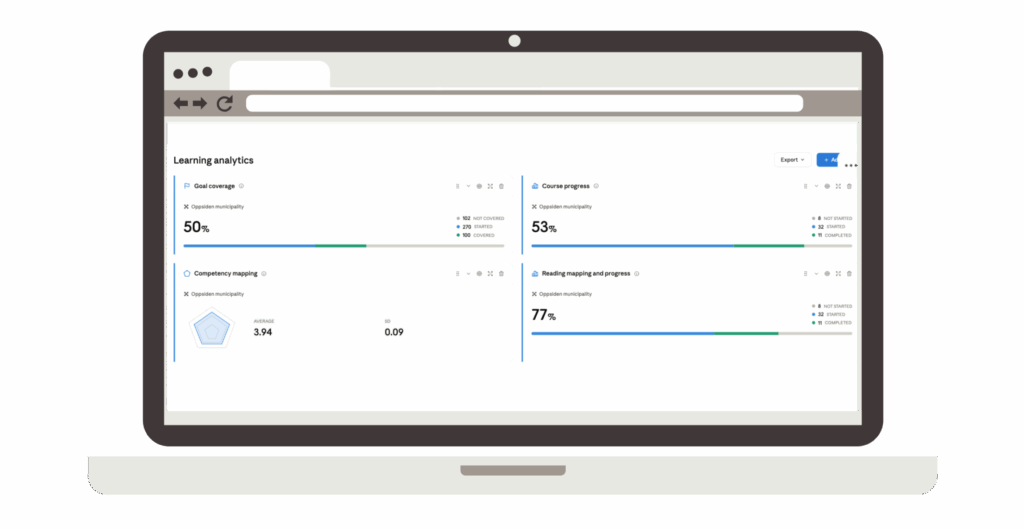
Gain insights into learning as it happens. Learnlab makes it possible to analyse participants’ contributions, responses and reflections as they work, and relate them to the learning objectives and competency goals you are working towards.

AI-assisted learning analytics helps you explore patterns, identify challenges and discover areas that need further exploration. This gives educators and course leaders a basis for adjusting activities, providing relevant guidance and supporting both individuals and groups.

Over time, these insights can be used to further develop teaching and investigate

A complete ecosystem for active and focused participants

Give participants more ways to explore, collaborate and demonstrate understanding. Combine interactive presentations, quizzes, mind maps, text, video and reflective assignments in the same learning pathway.
With Learning Focus, the educator decides which Learnlab activities and approved external websites or resources participants can access during a given session. This creates clear boundaries for focused work, while allowing necessary language and support resources to be included.
These features can be used in teaching, internal training and skills development programmes you create for other sectors.

Track skills development over time

Make follow-up part of the learning pathway. Use participants’ work, assessments and feedback to view their development in relation to the goals you have set.
This provides a basis for guidance, new activities and further skills development. At the same time, subject specialists and course coordinators can use the insights to improve content and prioritise the next steps.
What would you like to develop with Learnlab?
Connect research, teaching and skills development in one ecosystem. Create learning pathways for students, your own staff and external partners, and use the insights to develop both learning and new knowledge.

Together, we create solutions that make it easier to engage students and track learning over time.

Talk to us